
Old Khndzoresk
Old Khndzoresk
2h
5.7 km
1568 m
1250 m
Medium
Things to see
Khndzoresk Bridge
Saint Hripsime Basilica
×
The settlement of Old Khndzoresk was granted the status of a historical and cultural site in 2025.
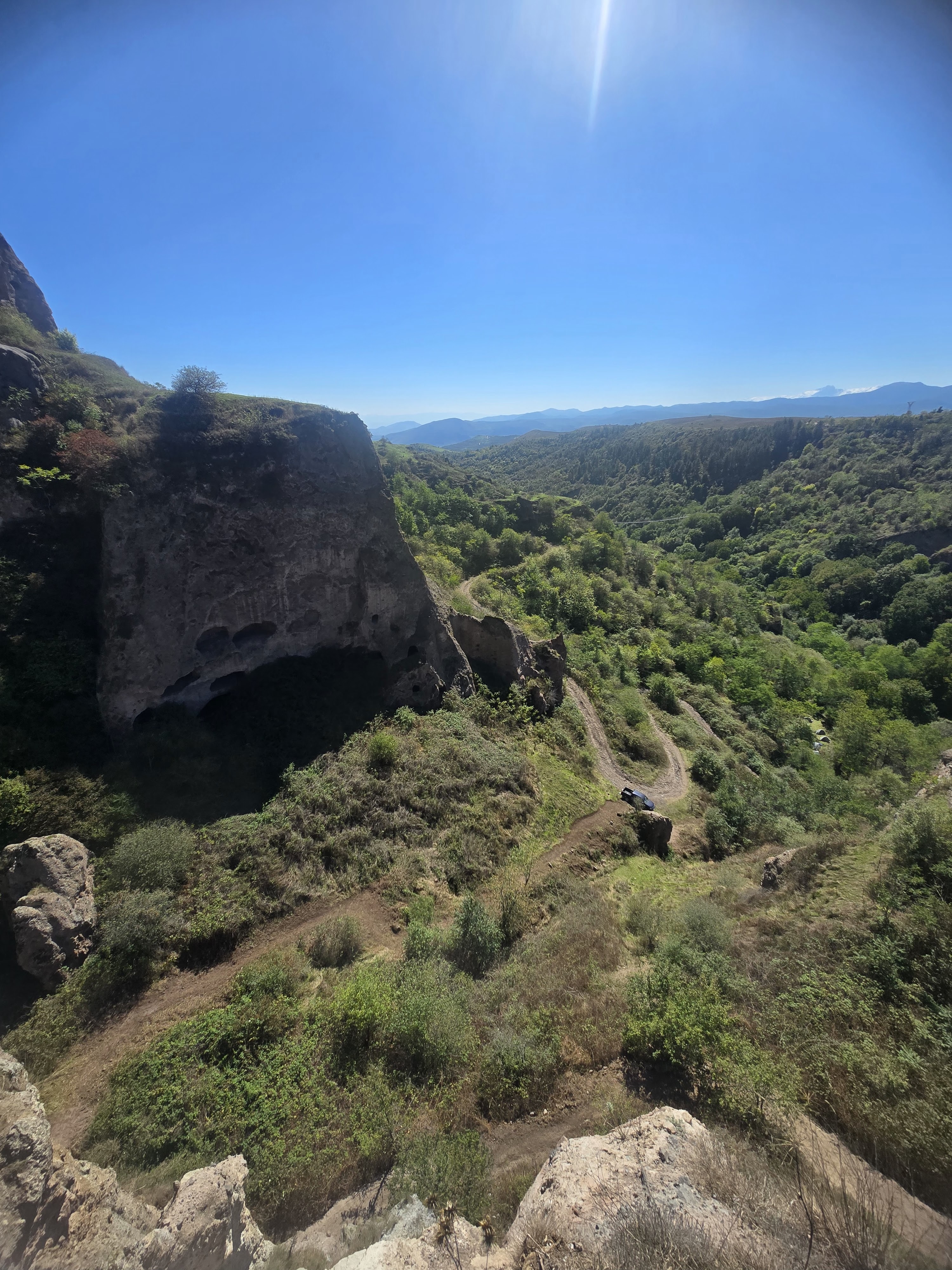
The village once consisted of two districts — Greater and Lesser. In its early stages, most dwellings were cave houses, which also served as defensive shelters. Over time, these were complemented by stone structures reaching up to three storeys high.
The terraced layout of the houses along the mountainside gave the impression of a multi-storey residential complex.
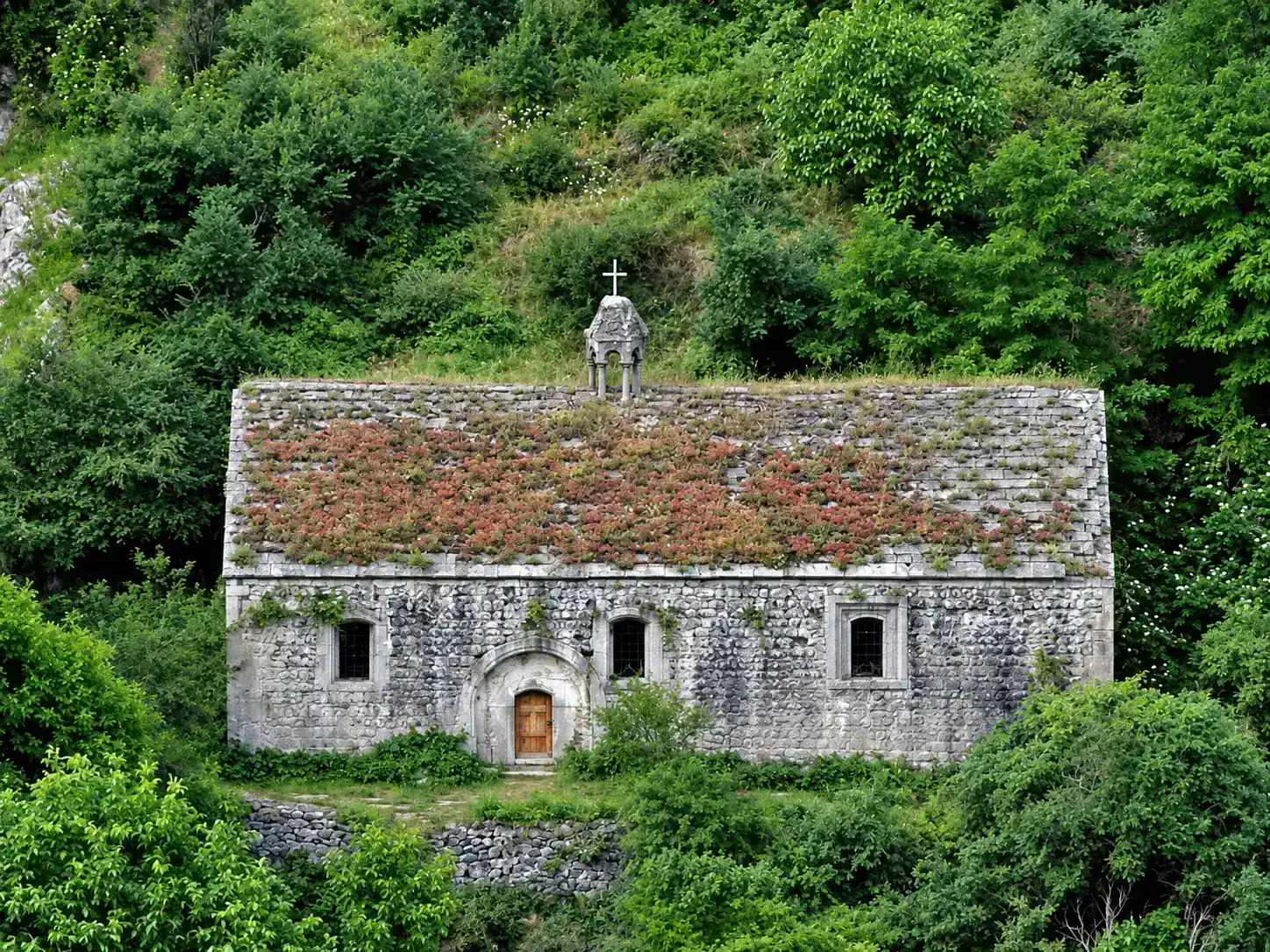
Among the monuments, Khndzoresk Fortress stands out. With its virtually inaccessible cave complex, it served as the military base of Mkhitar Sparapet, an Armenian commander, from 1728 to 1730. Four churches were built within the settlement; of these, Surb Hripsime (1665, a three-nave basilica) and Surb Tadevos (17th–18th centuries, a single-nave hall) have survived. The Anapat Church, once a centre of manuscript culture, now lies in ruins; its churchyard cemetery contains the grave of Mkhitar Sparapet. In the southeastern part of the site, a rock-hewn church dating to the 9th–10th centuries has also been preserved.
In the 1950s, the use of stone from Old Khndzoresk for the construction of a new settlement led to the degradation of the historical and cultural environment.
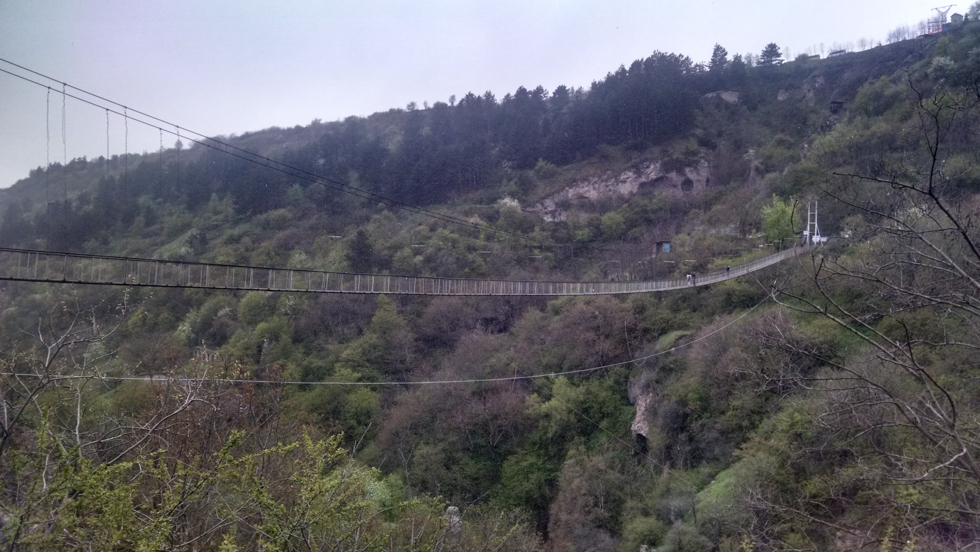
In 2012, a suspension bridge connecting the two gorges of Old Khndzoresk was opened — 160 metres long and 63 metres at its highest point.
A hiking trail links the current village of Khndzoresk with the Old Khndzoresk site, leading to St. Thaddeus Church, Mkhitar Sparapet’s Fortress, Khlatsants Spring, St. Hripsime Church, Nine Children’s Spring, the Suspension Bridge, Mkhitar Sparapet’s Tomb, and ends at the parking area above the bridge.
The village once consisted of two districts — Greater and Lesser. In its early stages, most dwellings were cave houses, which also served as defensive shelters. Over time, these were complemented by stone structures reaching up to three storeys high.
The terraced layout of the houses along the mountainside gave the impression of a multi-storey residential complex.
Among the monuments, Khndzoresk Fortress stands out. With its virtually inaccessible cave complex, it served as the military base of Mkhitar Sparapet, an Armenian commander, from 1728 to 1730. Four churches were built within the settlement; of these, Surb Hripsime (1665, a three-nave basilica) and Surb Tadevos (17th–18th centuries, a single-nave hall) have survived. The Anapat Church, once a centre of manuscript culture, now lies in ruins; its churchyard cemetery contains the grave of Mkhitar Sparapet. In the southeastern part of the site, a rock-hewn church dating to the 9th–10th centuries has also been preserved.
In the 1950s, the use of stone from Old Khndzoresk for the construction of a new settlement led to the degradation of the historical and cultural environment.
In 2012, a suspension bridge connecting the two gorges of Old Khndzoresk was opened — 160 metres long and 63 metres at its highest point.
A hiking trail links the current village of Khndzoresk with the Old Khndzoresk site, leading to St. Thaddeus Church, Mkhitar Sparapet’s Fortress, Khlatsants Spring, St. Hripsime Church, Nine Children’s Spring, the Suspension Bridge, Mkhitar Sparapet’s Tomb, and ends at the parking area above the bridge.