
From the forest to the Red Book: What everyone should know
The rules of forests and wildlife in plain language
Very often, when we hear the phrase “damage was done to nature,” it sounds abstract, almost distant. But in reality, every cut tree, every poached bezoar goat, every burned grassland has a concrete, measurable cost defined by the laws of the Republic of Armenia.
And that cost is not just about money, it is the price of lost balance,
endangered species, degraded ecosystems, and our shared future.
The law asks three simple questions: Who was harmed? How? And how great is the loss?
This article is a short guide to help understand how the state assesses damage caused to nature and what consequences illegal actions against wildlife and plant life can have. It’s natural if you haven’t been aware of these laws, but living consciously means knowing them.
It may seem logical to think, “It’s already a damaged tree, I’ll just cut it.” But the law says the opposite: even cutting such a tree is allowed only within the framework of a forest management project or with a special state permit.
Lack of permits or licenses
When someone uses wildlife resources without a legally required license or permit — for example, hunting, collecting, or selling animals, eggs, or other natural resources — this is already a violation of the law.
Destruction of rare or endangered species
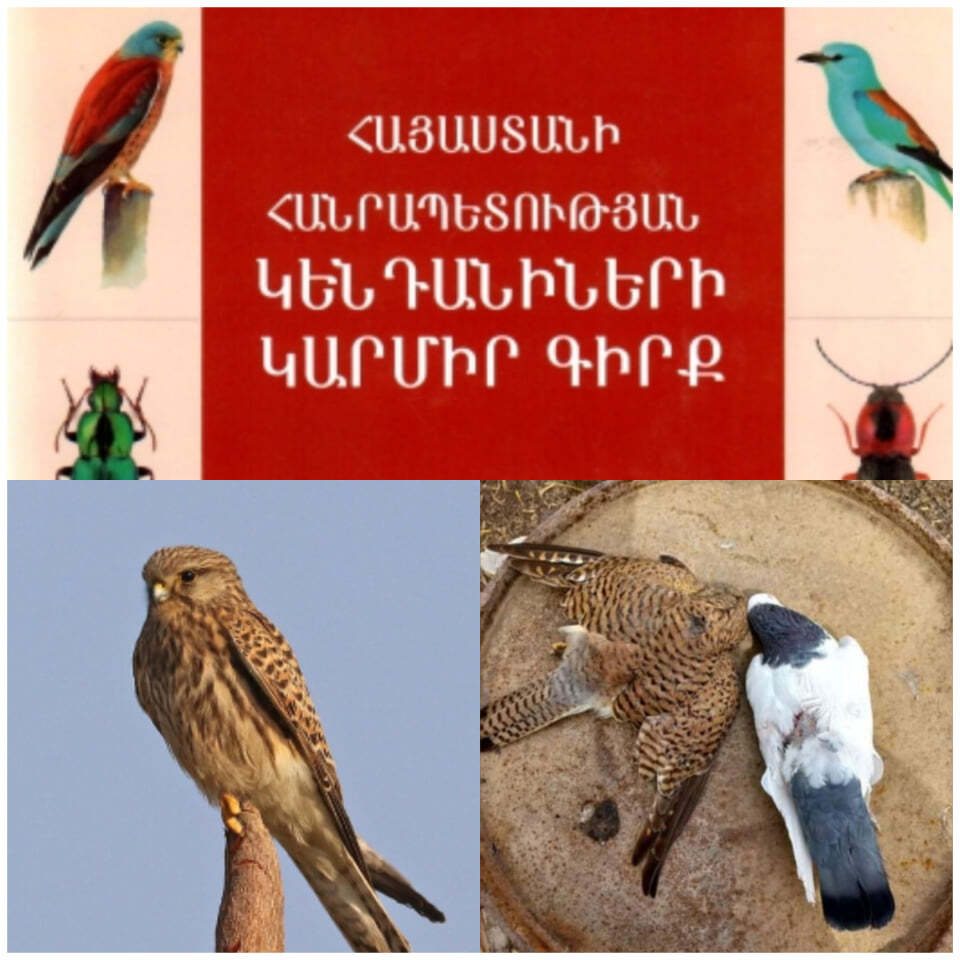
It is strictly forbidden to harm or destroy endangered animals, especially those listed in the Red Book, as well as their habitats. Any action that may reduce their population or damage their living environment is prohibited by law.
Violations of hunting and fishing regulations
The law clearly states when, where, and under what conditions hunting or fishing is allowed. Ignoring these rules is also considered an environmental violation.
Eggs of animals listed in the Red Book are also fully protected. The law states that they must not only not be destroyed, but must not be interfered with in any way — even moving such eggs is considered a legal violation.
Pesticides and fertilizers are also strictly regulated. Even an agricultural worker who uses pesticides in a forest area without special permission and proper oversight will be considered in violation of the law.
The animals listed below are among the most valuable species in Armenia — not in terms of money, but in real ecological value. The loss of each one affects the entire ecosystem.
Here are the fines for some of them
- Persian leopard — 3,000,000 AMD
- Bezoar goat — 3,000,000 AMD
- Armenian mouflon — 3,000,000 AMD
- Brown bear — 1,000,000 AMD
- Caucasian otter — 500,000 AMD
Among birds
- Bearded vulture — 250,000 AMD
- Black vulture — 250,000 AMD
- Flamingo — 200,000 AMD
And this list continues with dozens of other species.
There are also animals whose hunting is punishable by law, but many people do not realize that even harming a seemingly “common” species can lead to liability:
- Hare — 8,000 AMD
- Squirrel — 8,000 AMD
- Pigeon — 3,000 AMD
- Quail — 2,000 AMD
- Blunt-nosed viper (Gyurza) — 15,000 AMD
At first glance, it may seem like “a small thing.” But it is exactly these seemingly minor actions that maintain the delicate balance of nature.
When a tree is cut, it’s not just the wood that is damaged. Along with it are lost water and soil protection, shade, air purification, and the vital systems on which all of our lives and health depend.
That is why the penalties for tree cutting are relatively high. But how is the damage calculated in cases of illegal logging? It depends on the tree species and the diameter of the trunk.
Valuable and rare species
(walnut, plane tree, juniper, redwood, fruit trees)
- Up to 4 cm — 4,500 AMD
- 16–20 cm — 15,000 AMD
- Over 30 cm — 1,500 AMD for each additional cm
Other tree species
- Up to 4 cm — 1,000 AMD
- 20–24 cm — 6,000 AMD
- Over 30 cm — 500 AMD for each additional cm
Multipliers applied to fines
- Red Book tree species — 10×
- Protected areas — 5×
- Illegal cutting in Yerevan — 10×
- Other settlements — 3×
Example
Illegal cutting of a 20 cm plane tree in Yerevan can result in a fine of 100,000 AMD or more.
Some legal provisions are so clear that even their titles are enough to understand what is prohibited.
Why is all of this important?
No matter how large the numbers may seem, paying money to nature is only a small form of compensation. The existence of a bezoar goat or a giant tree cannot be restored through money or calculations.
But the law reminds us that nature is not free — it is priceless, and every act of harm has its consequences.
You have now become familiar with the world of animals and trees. The next step is entering those unique spaces where both exist in harmony.
Forests are living, evolving ecosystems, and hiking trails often pass right through them — landscapes where a number of specific laws apply.
For example, state forests cannot be sold; they are considered a public asset. If a person establishes a forest on their own land, they become the legal owner of that area.
But regardless of who owns the forest, one thing remains unchanged: the obligation to protect it.
An owner cannot treat a forest however they wish. The law requires them to protect the forest from damage and fires, prevent illegal logging, preserve biodiversity, and use forest land properly — without degrading or distorting it.
This is not only about avoiding penalties, but also about building a culture of responsible behavior toward nature.
Here, the state acts not only as a regulator, but also as a responsible partner, ensuring that forests are inventoried, mapped, protected, restored, and monitored in accordance with the law.
As a result, the forest becomes a shared value — under the collective care of the state, communities, and people.
The law allows the use of forests, but under strict rules
- Collecting berries, mushrooms, and medicinal plants
- Conducting care or sanitary cuttings
- Organizing tourism and scientific research
But there are important “Don’ts”
- Senseless or mass logging is not allowed
- Harming biodiversity is prohibited
- Using forest land for non-forest purposes without legally established procedures is forbidden
It is not surprising that such laws exist. In fact, the legislation is extremely detailed and protects nature in ways people often do not even imagine.
The law states that if you see freshly fallen fruits, mushrooms, nuts, or medicinal plants in a forest, you must have the appropriate permit before collecting them.
It may sound extreme, but this exists precisely to ensure the safety of wildlife and plant life.
Protecting nature begins with us. When we treat the environment more responsibly and simply avoid causing harm, we are already contributing to its preservation.