
Let us adapt the well-known proverb «Chickens are counted in autumn» to hiking life and say that «Difficult mountains are counted in summer», meaning that summer is the best time for challenging and multi-day hikes. Winter and spring usually serve as a preparatory period for getting into good physical condition: maintaining a consistent hiking routine during this period becomes the main guarantee of successful summer mountain adventures. Of course, we should also remember that the challenging and multi-day routes of the Armenian Highlands become accessible from the end of June, when most of the abundant winter snow above 3,000 metres melts, opening these routes to mountain enthusiasts.
In this article, we will present the process of preparing for challenging and/or multi-day hikes. Although it is impossible to cover every detail of such a journey within a single article, this text will help you organise the preparation process properly and divide it into stages.
Preparation requires a comprehensive approach:
- physical training and hiking experience
- thorough route planning, navigation and safety
- working with altitude
- proper selection of gear and equipment
- food
Physical training and hiking experience
The primary goal is to become accustomed to walking long distances with a backpack. You should prepare for challenging and multi-day hikes by frequently participating in easier, shorter and one-day hikes. This will allow your body to adapt more easily to long routes and high altitudes, while also giving you the opportunity to assess your abilities, evaluate the comfort of your gear and equipment, and calculate how much food and water you need for one day.
Challenging and multi-day hikes require endurance. To develop it, you can turn to endurance sports: running, cycling and swimming undoubtedly have a positive effect on your ability to overcome difficult mountain routes.
Thorough route planning, navigation and safety
Carefully study the route you are planning to follow, calculate the total distance, elevation changes and technical difficulty, and make sure that it corresponds to your level of fitness. For multi-day hikes, it is also important to study the water sources in the area so that you can carry sufficient water supplies if no sources are available.
Since mobile communication is almost entirely unavailable above 3,000 metres, you should have offline maps, such as maps.me, or paper maps, register with the local rescue services, and inform your family or friends about the dates of your journey and the details of your route.
Working with altitude
Most routes in the Armenian Highlands rise above 2,500–3,000 metres, which means that you should not attempt to set speed records, as breathing becomes more difficult at these elevations. Walking at a steady pace and drinking water frequently will make your time at high altitude more comfortable and enjoyable.
Gear and equipment
Both physical and technical preparation are essential for making a hike comfortable. Even when following weather forecasts, it is often impossible to predict nature’s mood, so having the right clothing, gear and equipment is particularly important during challenging and multi-day hikes. They will help you conserve the energy you need to complete the route.
It is important to note that all clothing, gear and equipment should be tested in easier conditions beforehand. For example, boots should be tested on one-day hikes or in an urban environment to help prevent blisters, while equipment intended for multi-day hikes should be tested during an overnight hiking trip.
Let us divide the necessary items into two groups: clothing and equipment.
Clothing
- high-ankle hiking boots with thick soles
- hiking gaiters
- several pairs of thermal socks, depending on the number of hiking days
- waterproof hiking trousers
- thermal clothing
- fleece jacket
- windproof and waterproof jacket
- warm and spare clothing
- sun hat and warm hat
- sunglasses
- buff
- thick and thin gloves
- swimsuit and towel, as swimming in high-altitude mountain lakes is one of the greatest temptations of the season
Equipment
- a backpack with a capacity of 25–30 litres for a one-day hike; for multi-day hikes, you will need a backpack with a capacity of 70–80 litres to carry your hiking equipment and clothing
- double-layer tent
- sleeping bag
- sleeping mat or karimat
- trekking poles
- thermos and water container
- personal tableware for multi-day hikes
- headlamp with spare batteries
- power bank
- first-aid kit
- sunscreen
- personal hygiene products
Food
Food is our main source of energy, so its selection requires special attention when preparing for challenging and multi-day hikes.
For long-distance walking, you need the following each day:
- 3,000–5,000 kcal of energy
- 3 main meals
- 1–2 snacks while walking; nuts and dried fruit are excellent snack options
Carbohydrates are the main source of energy, but it is also important to consume fats and proteins in a ratio of 4:1:1.
Freeze-dried food is an excellent option for the main meals on multi-day hikes. A wide variety is available on the market, including the Armenian brand Ecosnack, the Dutch brand Adventure Food and the Norwegian brand Real Turmat. Freeze-dried food is lightweight, making it possible to reduce the weight of an already heavy backpack. Perhaps the only disadvantage of this type of food is its above-average cost
Let us also discuss the camping stove separately, as it will be necessary during multi-day hikes, unless, of course, you have decided to prepare your food over a campfire. Camping stoves come in several varieties. We recommend choosing one that is as compact as possible and allows food to be prepared quickly.
Challenging and multi-day hikes are among the best experiences for assessing your own strength and abilities, and proper preparation is precisely what turns a hike from an exercise in survival into a genuine journey. Good physical condition, properly selected clothing and equipment, and a solid understanding of the route’s characteristics will allow you to focus on what matters most: enjoying the mountains, discovering new places and exploring the capabilities of your own body and mind while taking pleasure in every kilometre you walk. The better prepared you are, the freer and more confident you will feel along the route.
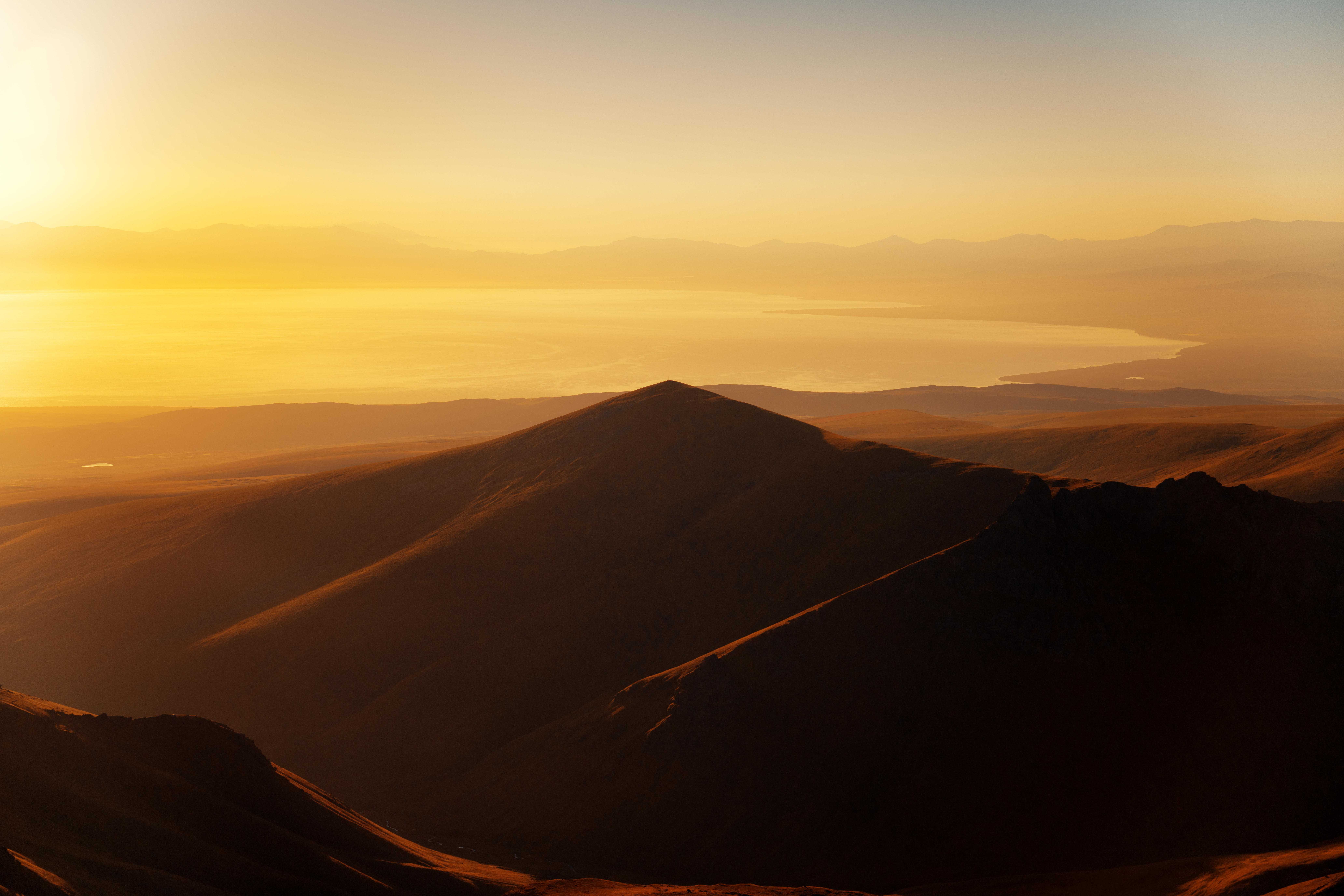
However, we should not forget that beautiful views do not come easily. Behind them are a heavy backpack and wet boots, which is precisely why a beautiful view encountered in the mountains feels like a true reward. After a few days, you will forget the weight of the backpack and the blisters on your feet, and the number of kilometres you covered will fade from memory. Yet the exceptional feeling will remain: the moment when you were sitting on a mountaintop or beside a campfire near your tent and realised that, on that day, you had moved in only one direction—forward.