During her time in Armenia, AVC volunteer Taline Kavoukian spent part of her stay exploring the country on foot. From the Akhuryan River gorge to the forests of Dilijan, her hikes brought unexpected encounters, generous hospitality, and time to connect with her homeland. Here, we share a selection of her experiences, in her own words, from her blog, Mythical Homelands.
Finding my way near Marmashen
WHAT a day!!! I bravely set out to hike a trail this morning. I hailed my Yandex, found the unrecognizably dusty “green” Opel a little further down the street than I expected, and optimistically settled into the car feeling that I had crossed the first hurdle of the day.
Arsen the driver was very pleasant, and after chatting with me to learn what I was setting out to do, told me I had set up the wrong destination. However, and unfortunately, he was wrong and I was right! I was delivered to the Marmashen Monastery complex (about 10k outside of Gyumri), the endpoint of my hike rather than the trailhead near Vahramaberd.
Poorly marked paths made it difficult to find my way. Online, I was led to believe that I would be walking along the Akhuryan river but this was a bit misleading. I cross-referenced with a few apps and different AI searches, but nothing is foolproof. And so, my day was defined by wayfinding, meeting helpful and not-so-helpful strangers, and discovering tiny corners of villages and communities that I would not have otherwise seen.
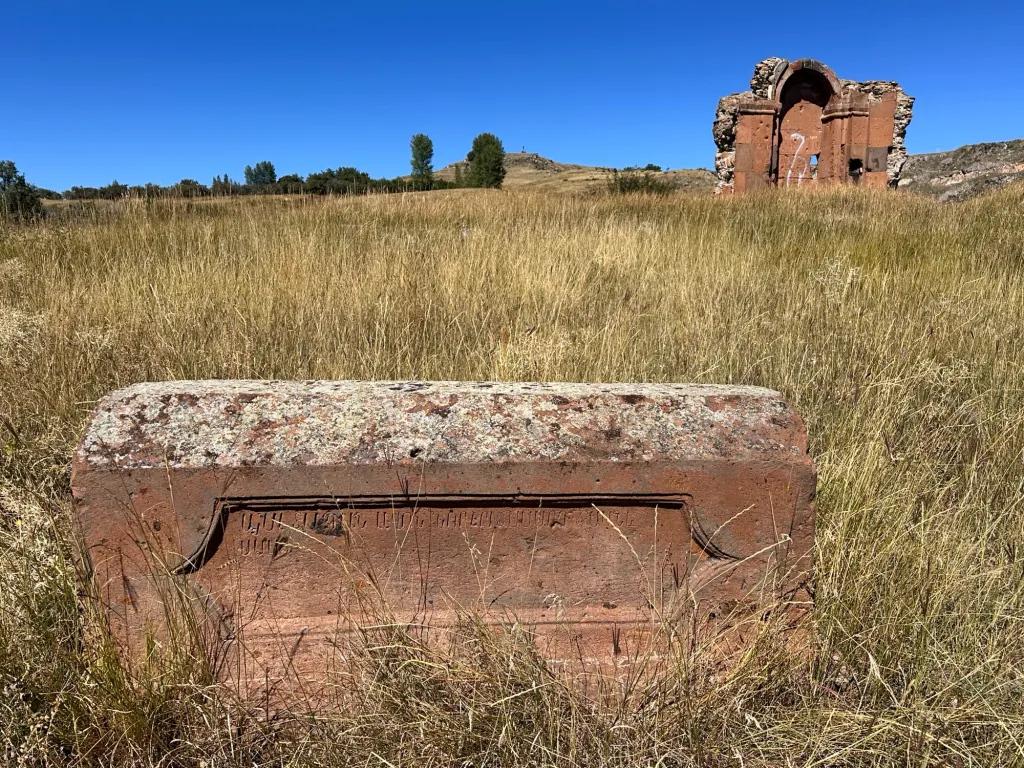
I then walked along the river for a kilometer or so, until the path ended. A large variety of very small butterflies in many colours and patterns were fluttering around the low-growing dry flowers and grasses . Retracing my steps, I found a spot overlooking the gorge to the river below, with the Cathedral Katoghike in the distance. Time for a little sketch!
Disappointed but not daunted, I decided to walk through the village of Vahramaberd. This was interesting: lowrise apartment buildings, khatchkars, a waterfall, and a water reservoir (built in 1925) and dam were some of the things I saw.
A young man was driving by and asked if would like a lift. By this time, I was tired, so I hopped into his 1960 Lada. Yes, 1960. No rust because they don’t salt the roads. The car drove just fine, and the suspension was good, too!
Along the Akhuryan River
My Gyumri friends Helena and Shant told me about their hike from Amasia to Ashotsk over dinner last night. I was looking for something close by, and this 17 km easy-to -moderate trail was perfect.
I arrived at Amasia and made my way to the gorge. En route, I stopped at a convenience store for some gata, a peach, a breakfast bun, and a bottle of tan. (I already had 4 bottles of water in my backpack.) Somehow, I missed the big yellow trailhead sign; perhaps there is more than one way down from the town. Regardless, the river served as my signpost, and I had a GPS map as backup.
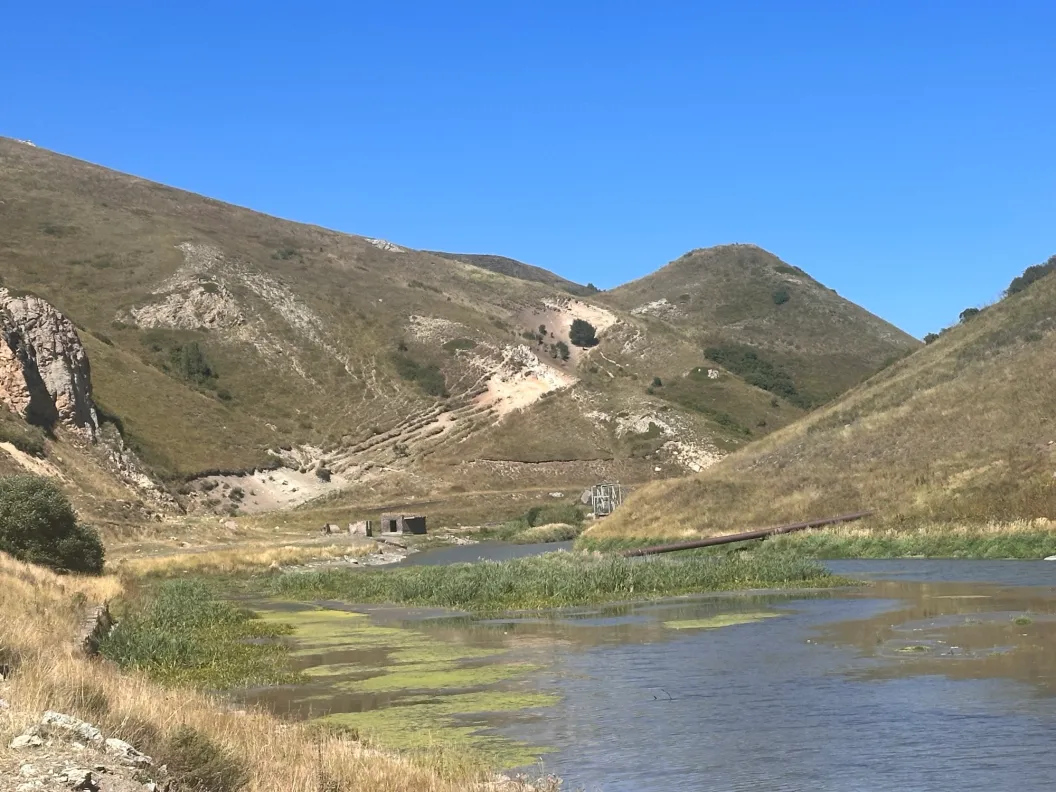
This is the kind of hike that helps me to slow down, even while I discover new things around every corner. The day reminded me of my Camino hikes, walking past hills, fields and rivers, and discovering villages each with distinct personalities. I was the only hiker I met all day!
Absorbing Armenia’s landscape on foot is one way I hope to understand and appreciate my homeland. What does it feel like to be in the mountains, the valleys, the gorges? I am here in early fall. How would my experience differ in other seasons? Vegetation and colours change throughout the year and vary from north to south. I am struck by the importance of specificity when thinking about what national landscape art truly represents. I take photos: birds, plants, bugs, scenery.
I walk towards the Bistro at the top of the road on the M1 highway. I ask the owner to call a taxi for me, as I don’t want to get the location confused on my app. Then, as I think about what I should order to thank him, he brings me a coffee and torte on the house, refusing payment. Armenian hospitality, everywhere!
Into the forests of Dilijan
Soon, we entered a very long tunnel, and when we emerged, Dilijan was waiting for us! With its green rolling hills and majestic mountain ranges in the Tavush province, Dilijan is like entering a different world.
I enjoyed Gosh village, Goshavank (named after Mkhitar Gosh: scholar, writer, priest, and legal thinker) and the setting, and then set out for the hike. I had downloaded HIKEArmenia‘s navigation map, which was very helpful. The trailhead itself was difficult to find, but the Armenian woman living across the road reluctantly guided me (after failing to convince me to sit and have a coffee with her). Once I was on the path and understood the blue line on my downloaded map signified my trail, I was on the way.
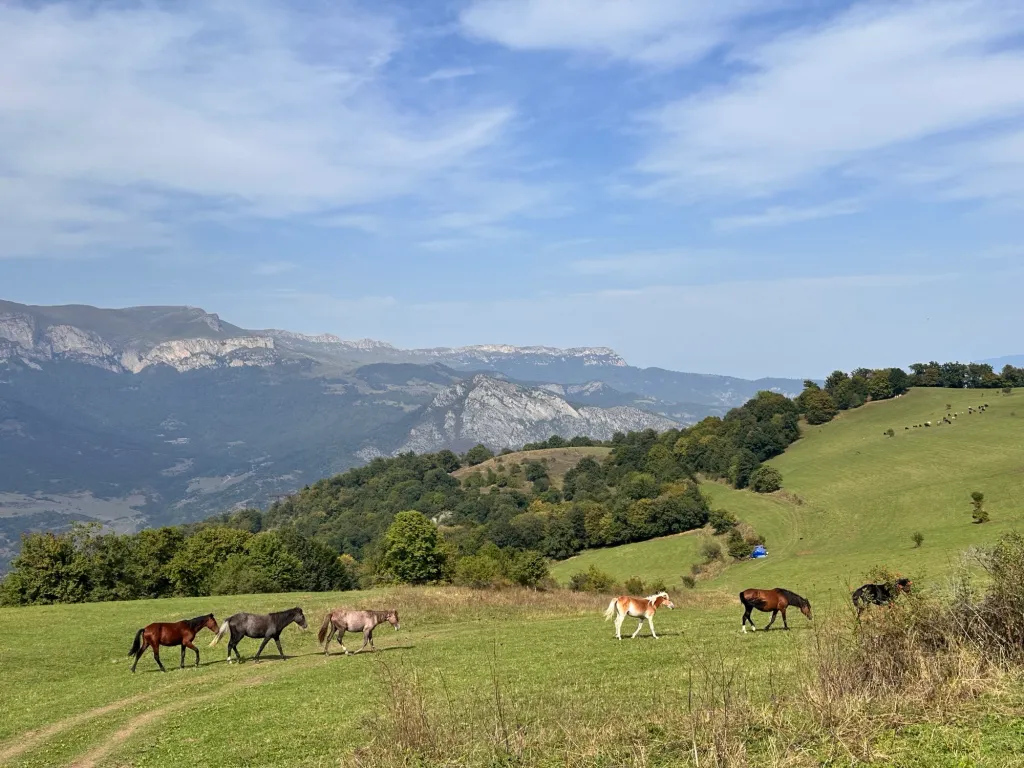
The ascent was tiring but very worthwhile. Views at every level gave me stellar panoramas. As I continued to climb, I would reach open meadows, and then retreat again into the forest. At the top, a wide open expanse revealed wild horses, a shepherd with his flock, and cows grazing in the distance. I marvelled that people still live such an idyllic existence (at least from my perspective).Yeghjervasar montain, Pambak, and ljevan mountain ranges were the backdrop.
About 1/3 of the way, the trail levelled off and then began a gradual and mostly shaded descent. Unfortunately, much of the trail was very muddy, so I was a little preoccupied with not slipping. (I am happy to report no falls today!)
I got up at 6 am and was ready to take advantage of a full day. My first stop was Haghartsin Monastery, from where I would walk the Hidden Waterfall Trail. Haghartsin Monastery is in a beautiful setting and beautiful structure. This was very pretty and serene. The trail itself is quite short (3.2 km return), with some moderate ascent and a stream to traverse. There were some scenic views along the way and the waterfall is lovely.
Once at the trails, I enjoyed the forest walks and the monasteries. It seems Armenians were ceaselessly carving khatchkars and church walls: the amount of work that has gone into these carvings constantly astounds me.
I walked back down Abovyan Street just in time to catch the bus back to Dilijan. Back in town, I browsed through the artisan studios of Old Dilijan, then walked the Drunken Forest trail. There was an incline (as is almost always the case), and the reward was a flat grove of pine trees at the top, with seating to enjoy the view overlooking Dilijan and the surrounding mountains.
A little adventure in Vayots Dzor
Our next stop near Yeghegis was the Jewish cemetery. (I was glad to have an opportunity to see this as well as Tsagadzor (next on our itinerary), since I had missed it on my group hike to Smbataberd. You certainly cannot do everything in one day, I have discovered!) This was an adventure, as we decided to take the short hike down instead of riding in the jeep. Unfortunately, there did not seem to be a clear path, and there certainly was no path clear of the thorns and thistles of the highlands! Boris bravely forged the way ahead of us, with a stray dog following loyally behind. We improvised walking sticks, and eventually and sceptically (but amiably!) followed behind. A while later and none the worse for wear except all the organic materials that Boris was now adorned with, we had reached our destination.
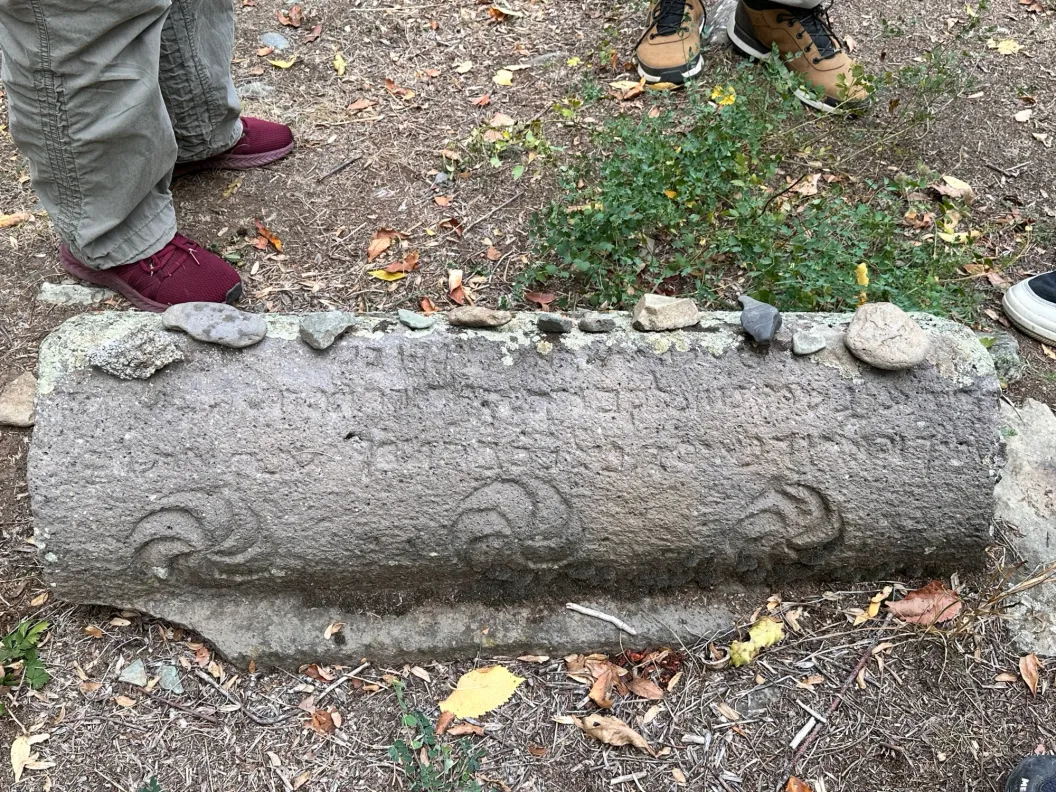
The Jewish Cemetery was interesting in that there were a few stones with visible Hebrew carved lettering , and included eternity and sun symbols more typically used in Christian and Armenian designs. The setting was peaceful, with the sound of a river nearby, a shaded forest, and the mountains behind. I noticed a Khatchkar set a little further away as well.
Walking the Yew Grove with AVC
With less than a week left in Armenia, I have only a few hiking opportunities remaining. Today, AVC organized a Senior and Professional Corps hike to Aghavnavank in Dilijan. I was excited to meet some more of my age-related peers, and also to see the fall colours of Dilijan. It is a 6km loop which passes a centuries old bridge as well as the Surp Asvadzadzin Monastery from the 1200’s.
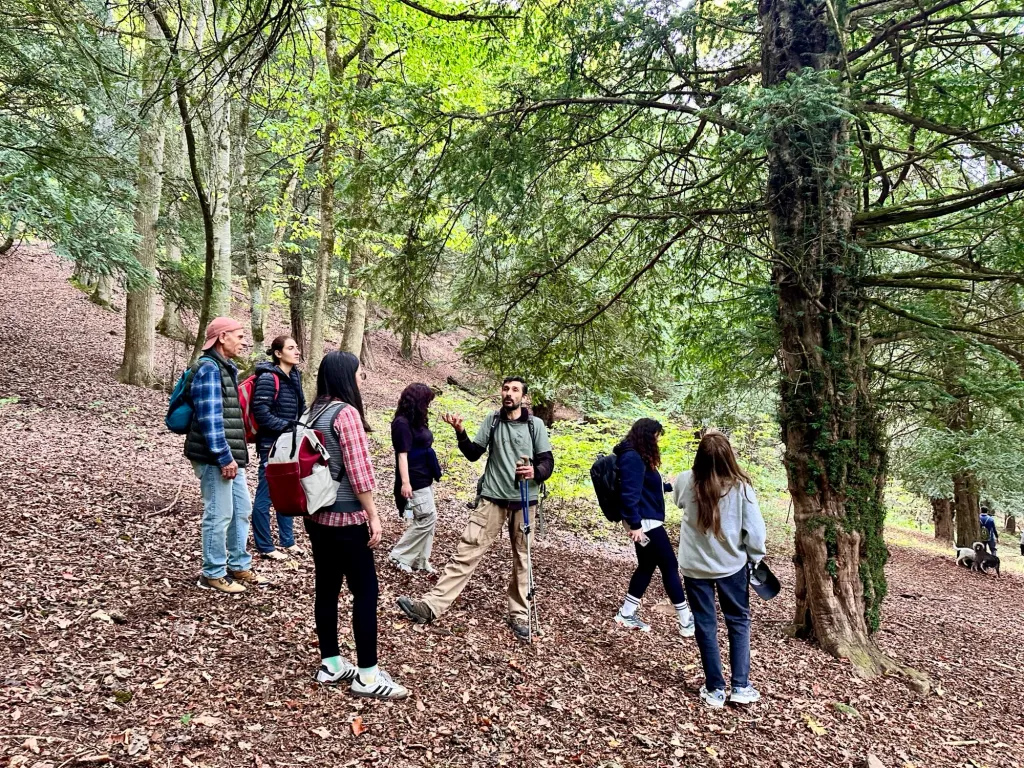
The forest feels fresh and peaceful, and the path underfoot is wide and easy to navigate . The rare yew grove has trees that are 300 to 400 years old, but they can live up to 1000 years. The Eurasian Yew is in Armenia’s Red Data Book (which tracks conservation and extinction of biological species). We all enjoyed a beautiful day of walking and talking, and were rewarded with a tasty lunch with a view at the Aghavnatun Family Hotel and Restaurant near the trailhead. (The hike can be found on the HikeArmenia app and site.) Thank you to AVC, HikeArmenia, and all the organizers who made this happen for us!
One last hike: Lastiver
This was my last hike before leaving Armenia. I knew it would be a super long day, with a 7:30 am departure and a 9 pm eta return, and with a more energized and bigger group than the day before. Time has a way of stretching on these trips and I am glad I was mentally prepared for the journey.
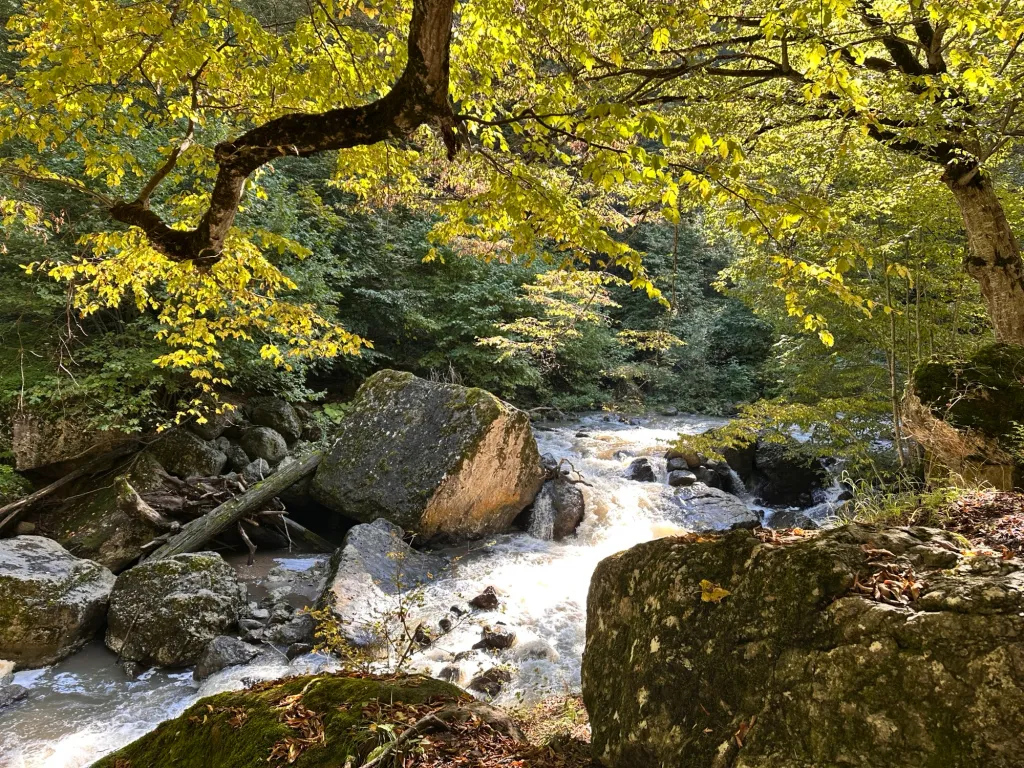
Lastiver is in Tavush near the village of Yenokavan, about 140 km or 2.5 hours northeast of Yerevan, very high up in the Ijevan mountains of the Miapor mountain range. Walking down (and up!) from the Apaga Resort is a very beautiful 7.5 km roundtrip hike, with dramatic views of the gorge, a magical setting with treehouses and a waterfall, and a cave with carvings (if you can find it!) We had a wonderful day, and were fortunate to have perfect weather to enjoy the spectacular scenery. Of course, singing, dancing, and eating are always de rigueur, as is making new and interesting friends along the way.
The emphasis here is on people, not time or money. This is not to say that money isn’t important, but people come first. There is an attitude inherent in customs such as “hyurasirootyun” (hospitality, even with strangers) that makes it feel like everyone is family, and no one is a stranger. For example, even when fruit sellers come by our outdoor table at a restaurant, we can say “No thank you, jan (dear), instead of quickly brushing them off. Sometimes it’s all in the details.
Hiking accounts by Taline Kavoukian, originally published on Mythical Homelands. This selection combines excerpts from her posts, preserving her original wording. Read her full hiking stories here.